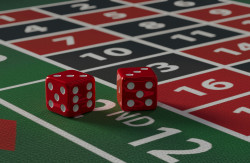
“The Gambler’s Fallacy”: How to Avoid Falling for the Classic Probability Error


“The Gambler’s Fallacy”: How to Avoid Falling for the Classic Probability Error
Have you ever thought that a coin has to land on heads next time because it’s shown tails five times in a row? Or that a roulette wheel is “due” for red after a long streak of black? You’re not alone. That line of thinking is a textbook example of what’s known as the Gambler’s Fallacy — the mistaken belief that past random events influence future ones. It’s one of the most common misunderstandings in probability, and it can lead even experienced players to make irrational decisions.
In this article, we’ll explore what the fallacy is, why it happens, and how you can avoid falling for it — whether you’re at a casino, investing in the stock market, or just trying to make sense of everyday randomness.
What Is the Gambler’s Fallacy?
The Gambler’s Fallacy is the belief that if something happens more frequently than normal during a given period, it will happen less frequently in the future (or vice versa). In other words, it’s the false idea that random events “balance out” in the short term.
Take roulette, for example. If the ball has landed on black ten times in a row, many players assume red is now “more likely.” But in reality, the odds haven’t changed — each spin is independent. On an American roulette wheel, the probability of red remains about 47.4% every single time, regardless of what happened before.
The fallacy arises because our brains are wired to look for patterns and fairness. We expect randomness to “even out” quickly, even though true randomness doesn’t work that way.
Why We Fall for It
Several psychological factors make the Gambler’s Fallacy so persuasive:
- Pattern-seeking: Humans are natural pattern detectors — it’s how we’ve survived as a species. But in random processes, this instinct often misleads us.
- Sense of fairness: We believe things should “even out.” If we’ve lost several times, we feel we’re “owed” a win.
- Selective memory: We remember the times when a streak finally broke and forget all the times it didn’t.
- Illusion of control: Many gamblers think they can influence outcomes through timing, strategy, or intuition — even in games of pure chance.
These mental shortcuts can make us act against mathematical reality, even when we know better.
Læs også:




Real-World Examples
The Gambler’s Fallacy isn’t limited to casinos. It shows up in many areas of life:
- Lottery and gambling: Players pick “lucky” numbers or avoid combinations that “just came up.”
- Stock market: Investors assume a stock “has to” rebound after several losses — or that a winning streak can’t last.
- Sports: Fans believe a team is “due” for a win after a losing streak.
- Everyday life: We think the rain “has to” stop soon because it’s been pouring for days — even though weather patterns don’t follow that logic.
In all these cases, we’re projecting a sense of order onto randomness that simply isn’t there.
How to Avoid the Trap
Knowing about the Gambler’s Fallacy is the first step, but resisting it takes awareness and discipline. Here are some practical tips:
- Think in terms of independence: Each coin flip, spin, or draw is a new event. Past outcomes don’t change future probabilities.
- Trust the math, not your gut: Probability isn’t something you can “feel.” Stick to the numbers.
- Set limits: If you gamble, decide in advance how much you’re willing to spend — and don’t chase losses because you think a win is “due.”
- Recognize your biases: The more you understand your own mental shortcuts, the easier it is to spot them in action.
- Take breaks: If you catch yourself trying to “predict” randomness, step away. That’s a sign the fallacy is creeping in.
Knowledge Is Your Best Bet
Understanding the Gambler’s Fallacy isn’t just about avoiding losses — it’s about thinking more clearly. Once you realize that chance has no memory, you can make more rational decisions in games, investments, and everyday life.
Whether you’re playing for fun or managing serious money, knowing the difference between luck, probability, and control is a powerful advantage. The person who understands that difference doesn’t just play smarter — they live smarter.
Læs også: