Strategy and Role Distribution: The Key to Analyzing a Cycling Team’s Plan

Strategy and Role Distribution: The Key to Analyzing a Cycling Team’s Plan
When a professional cycling team lines up for a major race, very little is left to chance. Every rider knows their role, every stage has a purpose, and every move on the road fits into a larger strategy. To truly understand — or even predict — a team’s performance, one must learn to read the signs of strategy and role distribution that unfold during the race.
The Team Hierarchy – From Leader to Domestique
A professional cycling team usually fields eight riders, but not all of them are there to win. At the top stands the team leader, the rider the team is built around. Depending on the race, that might be a general classification contender aiming for the overall victory, or a sprinter targeting stage wins. Surrounding the leader are the domestiques — the support riders who sacrifice their own chances to protect and assist the leader.
Each domestique has a specialty. Some fetch water bottles and food, others shield the leader from the wind, and some are climbing specialists who help set the pace in the mountains. There’s also the road captain, an experienced rider who acts as the tactical link between the team car and the riders on the road.
Recognizing who plays which role is the first step in decoding a team’s plan. If a strong rider spends energy early in a stage, it’s rarely a sign of weakness — it’s a clue that he’s working for someone else.
Stage Races as a Puzzle
In multi-day races like the Tour de France, Giro d’Italia, or Vuelta a España, strategy extends far beyond a single day. Each stage is a piece of a larger puzzle. A team might focus on the overall classification, on stage victories, or on secondary competitions like the points or mountain jerseys. The choice depends on the riders’ strengths and the race profile.
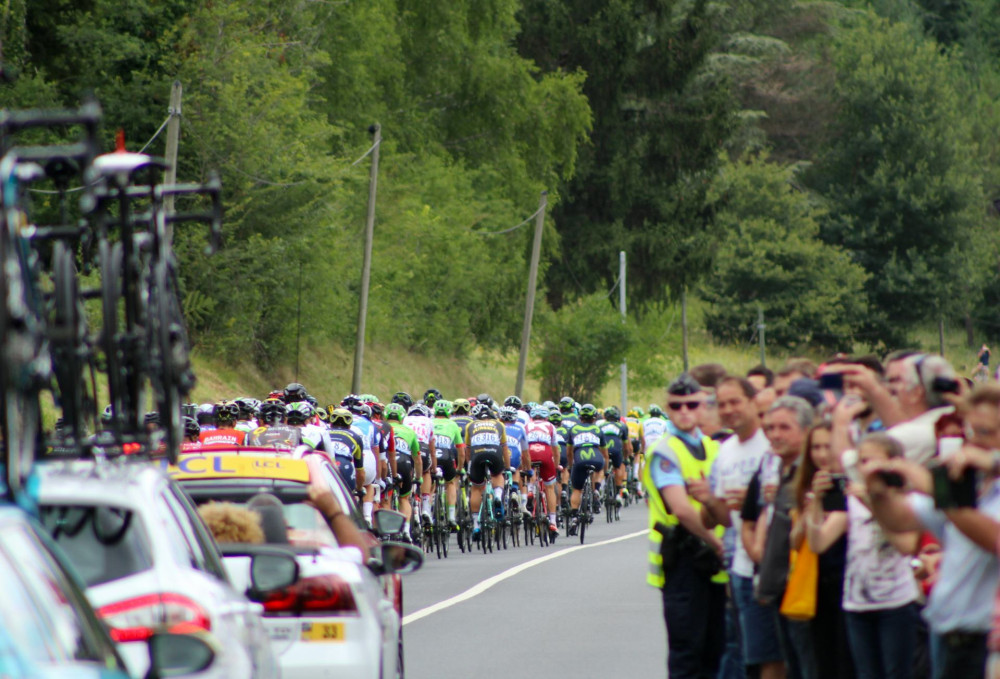
- Flat stages favor sprinter teams, which organize around a fast finisher and a lead-out train designed to deliver him perfectly to the final sprint.
- Mountain stages demand climbers and a team capable of controlling the pace so the leader isn’t isolated.
- Time trials are individual efforts, but the team still plays a role in preparation — from equipment choices to pacing strategies and recovery routines.
When analyzing a team, look for patterns: Which stages do they protect their leader? When do they let riders go in breakaways? These decisions reveal where the team’s true ambitions lie.
Læs også:
Tactical Tools on the Road
Even the best-laid plan must adapt to the chaos of racing. Weather, crashes, and rival attacks can change everything. That’s why teams rely on a range of tactical tools:
- Breakaways: A domestique might join an early break to force other teams to chase or to be in position to help the leader later.
- Pace control: Teams can set a high tempo to discourage attacks or to wear down competitors.
- Key attacks: In the mountains or on windy stages, a well-timed attack can split the field and create decisive time gaps.
For attentive fans and analysts, these tactical signals are the breadcrumbs that reveal a team’s thinking in real time.
Data, Communication, and Modern Analysis
Modern cycling is as much about data as it is about instinct. Teams use advanced technology — GPS tracking, power meters, and real-time communication — to refine their strategies. Sports directors monitor riders’ performance on screens in the team car, adjusting tactics on the fly. They can instruct riders when to attack, when to conserve energy, or when to change the plan entirely.
Analysts now combine live observations with statistical models: how often a team succeeds in breakaways, how their leader performs on specific climbs, or how they respond to certain race conditions. This data-driven approach has transformed cycling into a sport where strategy is measurable as well as visible.
When Strategy Meets Human Nature
No matter how sophisticated the plan, cycling remains a human endeavor. Fatigue, illness, nerves, and morale all play enormous roles. A domestique having a great day can change the race’s dynamics; a leader losing confidence can shift the team’s entire focus.
Understanding a team’s plan on paper is one thing — understanding the people executing it is another. Teams built on trust and communication can execute complex tactics under pressure, while those with internal tension often unravel when the race gets tough.
Reading the Race Like a Game
Analyzing a cycling team’s plan is like watching a high-speed chess match. Every move — a change in tempo, a positioning shift, an attack — tells part of the story. The better you understand the roles and the tactical patterns, the easier it becomes to predict who will succeed.
For fans and analysts alike, that blend of physical endurance, psychological depth, and strategic nuance is what makes cycling so captivating. In the end, it’s not just the strongest legs that win — it’s the smartest plan behind them.
Læs også: